

AI Continues to Enhance Daily Workflows
Now that we’re in the age of artificial intelligence, it’s actually pretty cool. Businesses and customers alike have embraced these new technologies with open arms and are using AI to boost customer experience and streamline business communications.
In fact, in our 2025 State of Customer Experience Report, business leaders said that when customers are shown responses written by humans and ones written by generative AI, 60% of customers actually preferred the AI-generated response. Common AI tools used for business communication include bots like ChatGPT and Google Gemini, which help generate emails, reports, and knowledge base articles.
Unified Communications Is Going Mainstream
Rather than providing multiple business communication tools that can lead to fragmented conversations, IT managers are now tasked with selecting tools that unify communication channels—voice, video conferencing, automation, team messaging, and more—into comprehensive UCaaS solutions. These digital Swiss Army knives streamline interactions, enable quicker, smarter decisions, and empower remote and hybrid work forces like never before.
By sticking with familiar tools, teams can save on training, reduce errors, and limit workflow delays, but there’s always room for improvement.
Embrace efficiency and effective communication by making the most of your existing tech stack
Mobile-First Communication Is Shaping the Future of Workplace Interactions
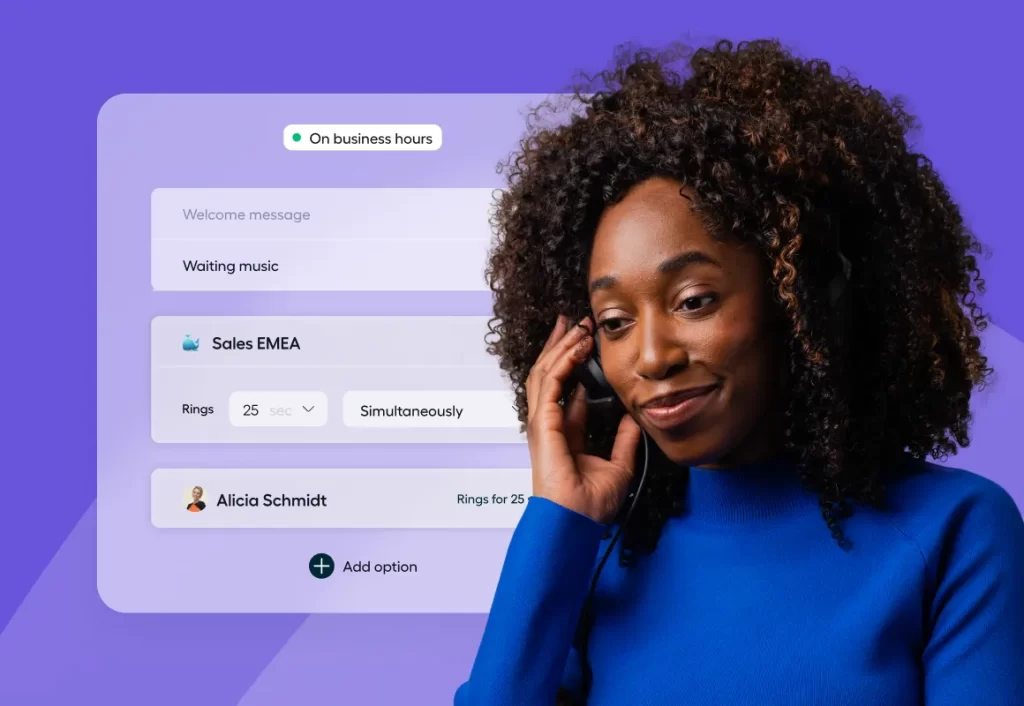
Customers expect fast responses, and a mobile-first platform means agents can manage interactions effortlessly — whether they’re in the office or working remotely. With features like mobile app support for Remote workers, businesses can provide exceptional 24/7 customer support. The result is faster response times, improved flexibility, and — best of all — happier customers.
As businesses continue to embrace remote and hybrid work models, employees and contact center agents need tools to stay connected and productive on the go. In addition to mobile accessibility, this trend is also about seamless integration. .
Data Integration Is Redefining Customer Experience Strategies
Streamline omnichannel communication | Implement a unified customer data platform (CDP) to gather and centralize customer insights across all touchpoints
Unifying customer data enables businesses to tailor each interaction, aligning with the growing expectation for omnichannel communication. Watch customer satisfaction rise as you implement these initiatives..
This approach adapts to customer preferences and leverages AI to deliver more intelligent customer experiences.
Choosing the Right PBX for Your Business
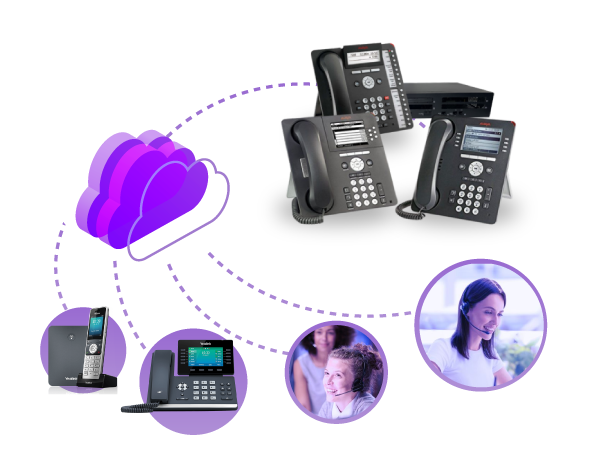
No matter what PBX you choose, you should strive to make sure it meets your company’s needs. The way we work has changed so much in two decades. Shouldn’t your PBX keep up with you?
Assess your company’s growth trajectory and range of internal and external communications. No one knows your business better than you do.
If you have an existing on-premise PBX, a hybrid system may make sense as a transitional step. If starting from scratch, a hosted PBX is likely the best choice
Hosted PBX systems have lower upfront costs and predictable monthly fees. On-premise systems require a large initial investment. Consider both short-term and long-term costs
Hosted PBX systems scale easily as your company grows by simply adding lines. Traditional PBX systems are harder to expand. Select a system that can handle your expected growth.
With a hosted PBX, the provider handles maintenance and support. On-premise systems require in-house IT expertise. Factor in staffing costs and time.
Cloud PBX systems offer advanced features like CRM integration and mobile apps. Legacy systems are more limited in functionality. Evaluate which features are must-haves for your team.
A PBX system should have built-in redundancy to maintain uptime. Cloud systems generally offer better disaster recovery than on-prem options. Consider a provider’s service level agreement (SLA)
Hosted PBX providers adhere to strict security standards like HIPAA and PCI DSS. On-premise systems are only as secure as your internal protocols. Don’t overlook this critical factor.
Choose a PBX provider with 24/7 customer support to quickly resolve any issues that arise. Test out support channels before committing
Consider not just your current needs but where your business is headed. A flexible, cloud-based PBX system will be easier to adapt as technology evolves
VoIP-based PBX systems can significantly reduce costs compared to traditional phone lines. Businesses only need an internet connection instead of a separate voice infrastructure.