
Public Announcement System



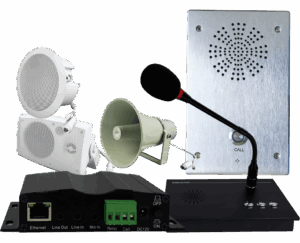
Types of PA Systems
PA systems vary significantly based on their intended use, scale, and technology. The main types include:
- Portable PA systems: Compact, all-in-one systems often powered by rechargeable batteries. They are ideal for traveling musicians, tour guides, classroom instructors, and small public gatherings where mobility is essential. A single unit often contains the amplifier and mixer.
- Product example: The
is a battery-powered unit that includes inputs for microphones and instruments, ToneMatch processing, and Bluetooth connectivity.
- Product example: The
- Column PA systems: A type of portable system with a subwoofer and a vertical column of smaller speakers. These offer wider and more even sound coverage than a traditional portable system and are often used by DJs and small bands for gigs.
- Product example: The JBL Professional EON ONE Compact
is a column system that features a professional-grade mixer and can be battery-powered for portability.
- Product example: The
- Fixed PA systems: Systems that are permanently installed in a building or venue. These are common in schools, hospitals, offices, and religious institutions and often feature wall-mounted or ceiling speakers.
- IP-based PA systems (PA over IP): Networked systems that use an existing internet protocol (IP) network to transmit audio. This technology offers scalability and flexibility for large, complex venues like airports or campuses.
- Product example: Honeywell offers systems like the HCU-2000 Intevio Public Address System
, which features IP integration.
- Product example: Honeywell offers systems like the
- Voice alarm systems (PAVA): Specialized systems that combine day-to-day announcements with automated emergency messages for safe and controlled building evacuations during a fire or other crisis.
- Product example: Bosch manufactures a range of voice alarm systems, such as its EN 54-16 certified PAVA solutions, built for compliance with safety standards.
Key components of a PA system
Regardless of the type, most PA systems consist of these fundamental parts:
- Microphones: Capture sound and convert it into electrical signals. Common types include wired, wireless, condenser, and dynamic microphones.
- Amplifier: Boosts the electrical signal from the microphone to drive the speakers. Amplifiers can be integrated into “active” speakers or be a separate unit for “passive” speakers.
- Mixer (mixing console): Acts as the “brain” for systems with multiple audio sources, like microphones or music players. It allows a user to control and blend different sound signals.
- Speakers: Convert the amplified electrical signals back into audible sound waves. Speaker types range from ceiling and wall-mounted models to high-power column arrays and horn speakers, depending on the application.
- Cables and accessories: Used to connect all components of the system. Important factors include cable quality and durability, especially for long runs. For wireless systems, batteries and receiver units are included.
How to choose a PA system
When selecting a PA system, you should evaluate your specific needs based on these factors:
- Primary use: Determine if the system is for speech, music, or both. Music reproduction often requires a wider frequency range and more power than speech.
- Venue and audience size: The size of the space and the number of people determine the required wattage and speaker setup. For large, noisy areas, you will need a more powerful system than for a small room.
- Fixed or portable: Decide whether a permanent installation or a mobile, all-in-one setup is needed. This will affect your component choices and budget.
- Wired or wireless: Wireless microphones offer freedom of movement, while wired mics ensure a consistent signal without interference. Many systems are compatible with both.
- Sound quality: Consider the required audio clarity, especially for music applications. High-quality components and proper installation are crucial for minimizing distortion and feedback.
- Scalability and budget: If your needs might grow, look for a system that can be easily expanded. Prices vary greatly, so set a budget based on your functional requirements and room size.