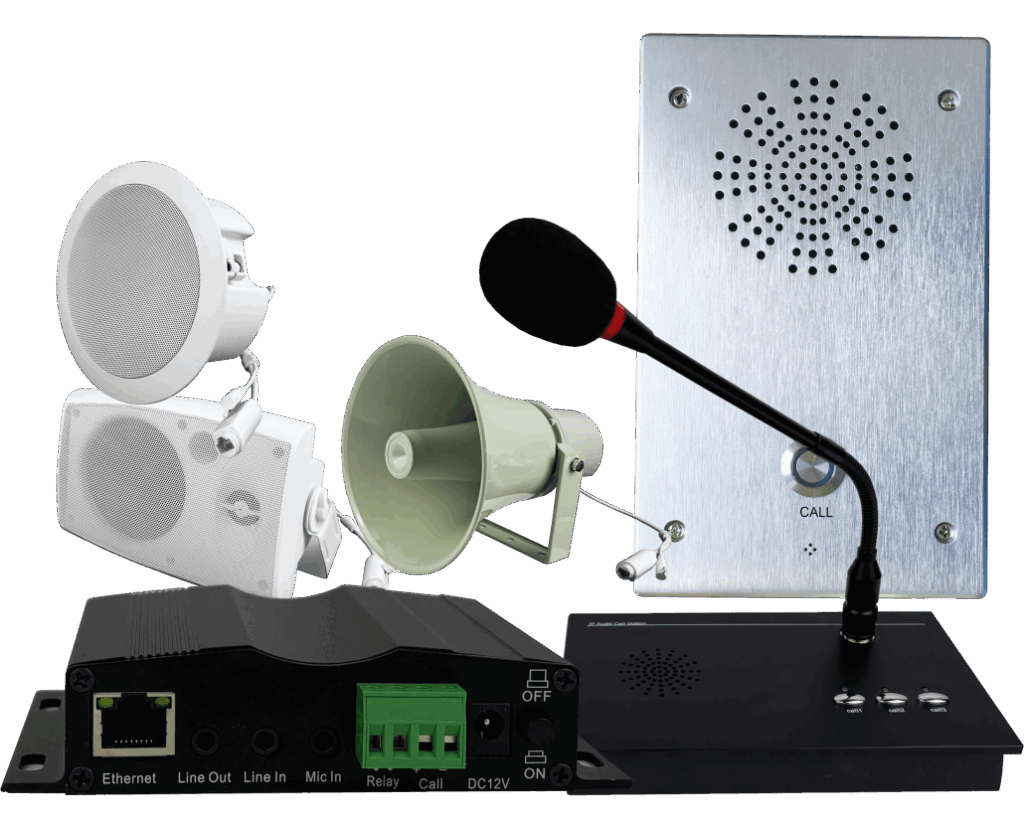
Our public address systems are used in buildings, industrial facilities and in public infrastructures from transport to smart cities to ensure enhanced safety and efficiency.
Need a power boost or technology update for your Public Address system? Contact Us!
More Possibilities, One Platform
Unified PA is an IP PA system and an essential component of Commend’s holistic solution approach.
This approach provides unique opportunities for operators and efficiency for users in daily operations for example, it allows any station to make announcements.
At the same time, the uniform platform makes it possible to react immediately to announcements and even to respond via the speakers as well as via the stations.
Our public address systems are used in Shopping Malls, industrial facilities and in public infrastructures from transport to smart cities to ensure enhanced safety and efficiency.
How Telephones interface with Public Address Systems
Commend IP Amplifiers come with SIP/IoIP capabilities, which allows them to integrate easily and seamlessly into existing VoIP/SIP-PBX systems as needed.
This enables Public Address broadcasts via SIP telephones as well as the option of adding PA to existing SIP-PBX systems.
Even serverless solutions can be implemented with very simple means, using SIP telephones and Commend IP Amplifiers or Commend IP speakers.
If you already has an existing analogue system in place Our hybrid solution can allow both systems to be combined as another cost-effective option.
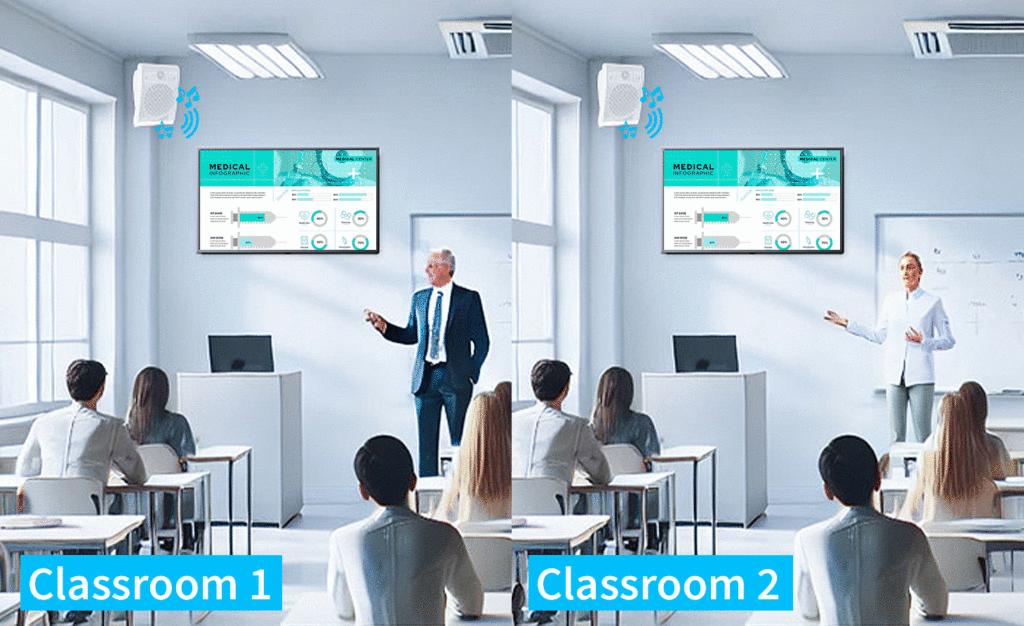
A common feature when designing PA systems is creating zones throughout the school giving teachers the ability to isolate certain areas as required. For example, the library or school hall during exam periods
School PA Systems – Key Function
School Public Address System for Instant Voice Messaging and Emergency Notifications
Provide voice paging and instant messaging throughout the school area, regardless of size
Send emergency notifications quickly and easily from a main console or over the phone
Broadcast to certain zones only meaning messages are targeted.
Enhance safety with automated weather alert messaging and emergency panic button stations
Add innovative scheduled bell alerts and clocks time synchronization
Key Features and Advantages
ANNOUNCEMENTS & TONES
Live PA announcements. Also prerecorded, time scheduled audio message, tone, alarm and bell distribution.
BACKGROUND MUSIC STREAMING
Multiple simultaneous streams of background music can be distributed throughout the system at each zone.
UNLIMITED MULTI ZONE
Dynamic grouping of PA zones, with no limit on the number of groups or the number of zones within a group.
AMBIENT NOISE SENSORS
Optional ambient noise sensing microphones provide Automatic Level Control (ALC) across the system.
SCALABILITY
Features dynamic grouping of PA zones, with no limit on the number of groups or the number of zones within a group ensuring complete system scalability.
FLEXIBILITY
System size and design flexibility plus time and zones scheduling, the ability to create detailed announcement files and dynamic grouping of PA zones.
IP PLATFORM
The ability to connect devices anywhere on the network and RTP Transmission protocol used for delivering audio over the system.
INTEGRATION
Seamless integration to many leading 3rd party system including building & security management, CCTV, access control and telephony.
RELIABILITY
The IP PA system has the added ability to monitor and interrogate the system for faults via the network.